
Industrial downdraft
tables.
Cleaner air starts at
the workbench.
Capture grinding dust, sanding particles and welding fumes close to the source. NAPCEN downdraft extraction benches bring the work surface and air collection system together for demanding manufacturing processes.
Request an engineered quotation
Tell us what your process generates. Approximate values are welcome.
Trusted By Industry Leaders
A few of the brands we've grown alongside



















Control airborne particles
emission challenges
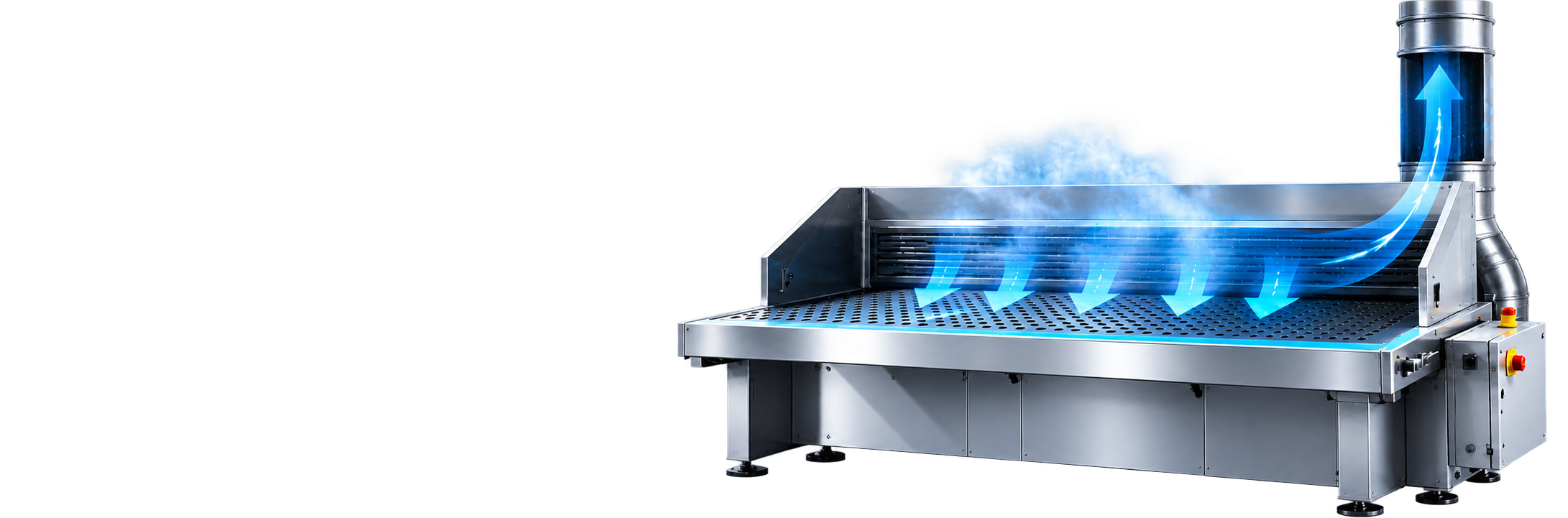
A downdraft table is a ventilated industrial workbench that draws air through an open or perforated surface. The airflow carries compatible dust or fume toward a collection system before it disperses through the workshop.
Bring extraction
closer
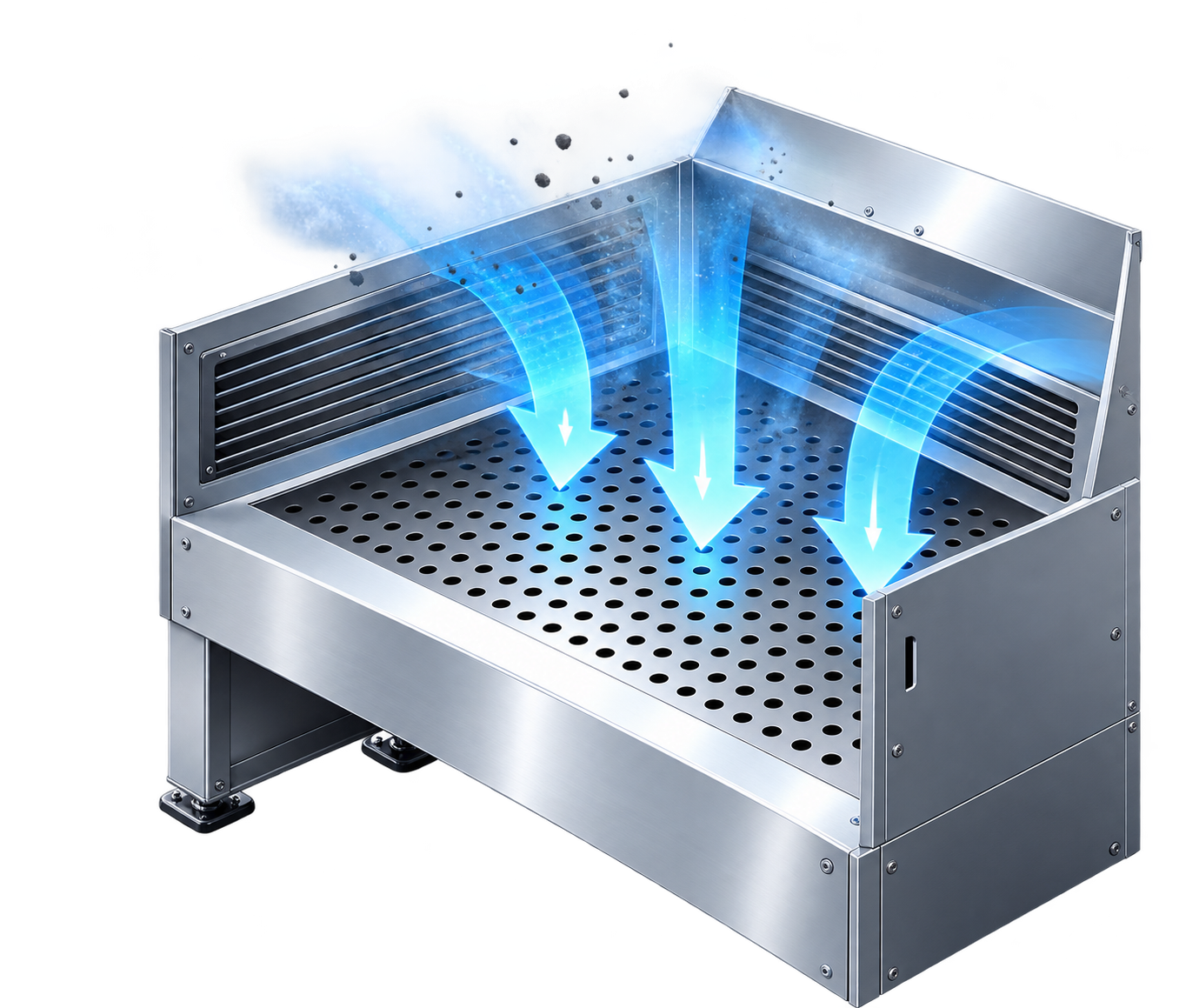
Position the emission source over the active extraction area. Rear and side extraction panels can help contain particles generated above the tabletop.
Match the dust
to the system
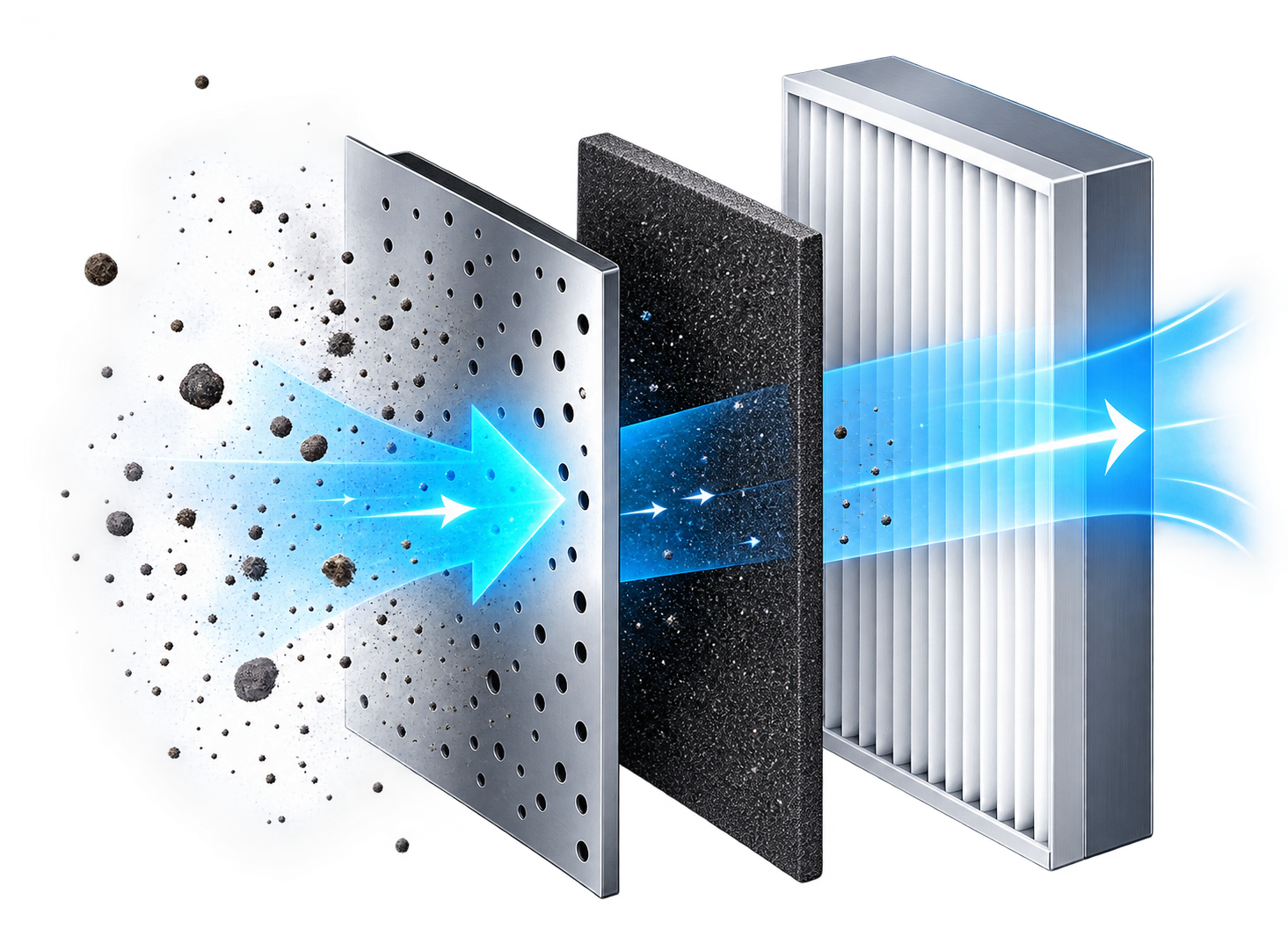
Choose dry filtration or wet collection around the material, particle characteristics, sparks and process duty. Different contaminants require different engineering decisions.
Keep performance
visible
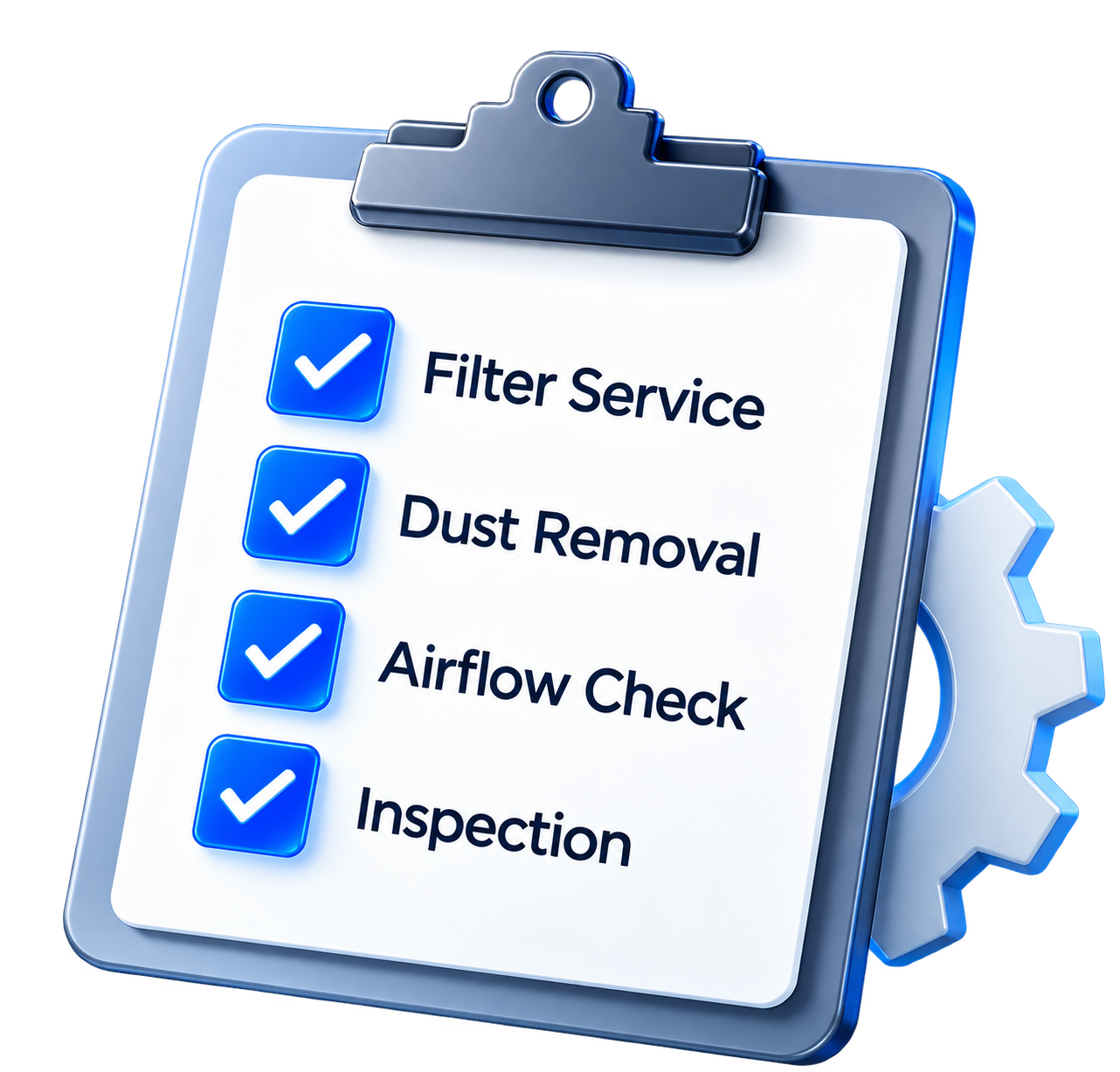
Plan access for filter servicing, dust or sludge removal, airflow checks and inspections. A maintainable bench is easier to keep operating as intended.
The right collection
method. The right
working environment.
Start with the process and workpiece. The bench footprint, extraction arrangement, collection technology, and accessories can then be reviewed as one cohesive system.
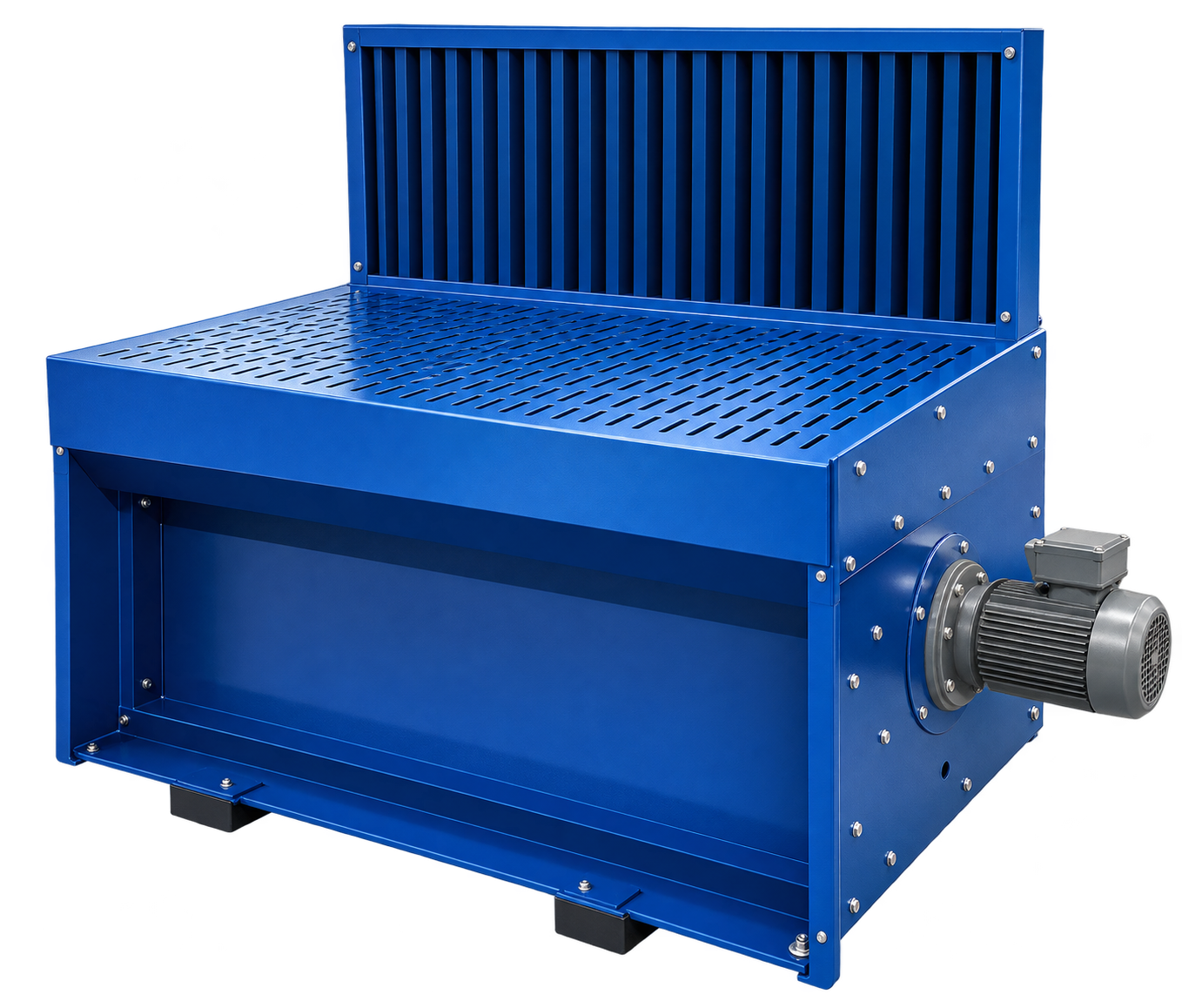
Dry downdraft table
For compatible dry particulate from grinding, sanding, and deburring. Filter selection and cleaning arrangements depend on dust loading, particle size, and operating duty.
- Cartridge or bag filtration matching
- Collection drawers & quick access
- Spark arrestor for hot-work safety
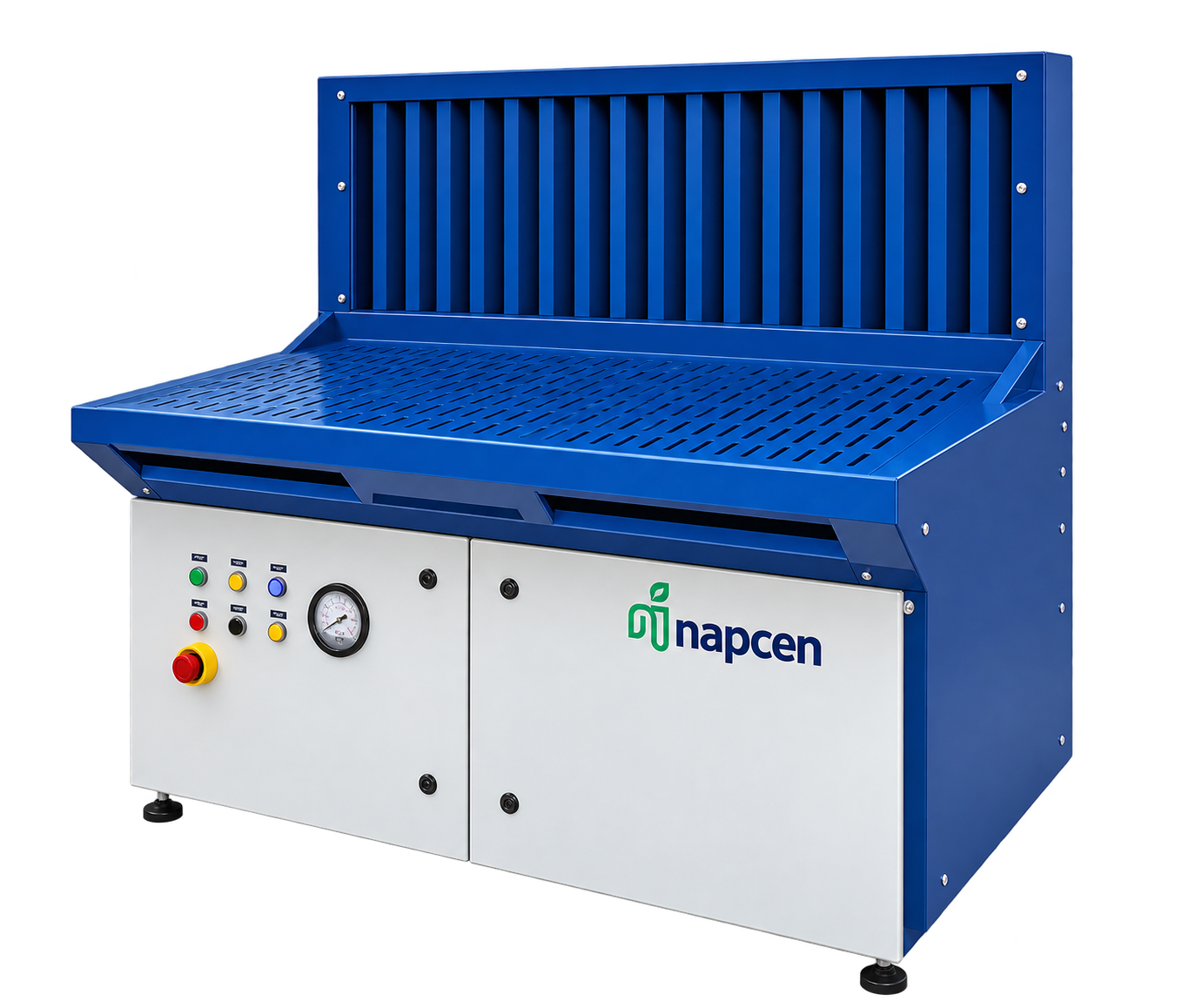
Wet downdraft table
Uses water contact to neutralize hazardous particulate. Selection requires a rigorous material check for reactivity, moisture control, water maintenance, and safe sludge disposal.
- Water compatibility verification
- Automated water-level control
- Reactive metals & hydrogen monitoring
Portable extraction
Flexible workshop mobility with heavy-duty castors, locking stability, and simple power integration.
Backdraft + downdraft
Dual capture planes to control upward plume projection and maximize operator boundary breathing zone capture.
Custom workbench
Engineered deck sizing, heavy load ratings, tailored height adjustments, and multi-zone dampers.
Industrial Downdraft Table
Manufacturer
NAPCEN downdraft tables capture dust and fumes from grinding, welding, polishing and woodworking. Explore portable and custom extraction benches with dry or wet collection options. Request a quote for your industrial application.
Grinding Downdraft Table
NAPCEN Grinding Downdraft Tables provide dust extraction at the work surface for metal grinding, deburring and abrasive finishing.
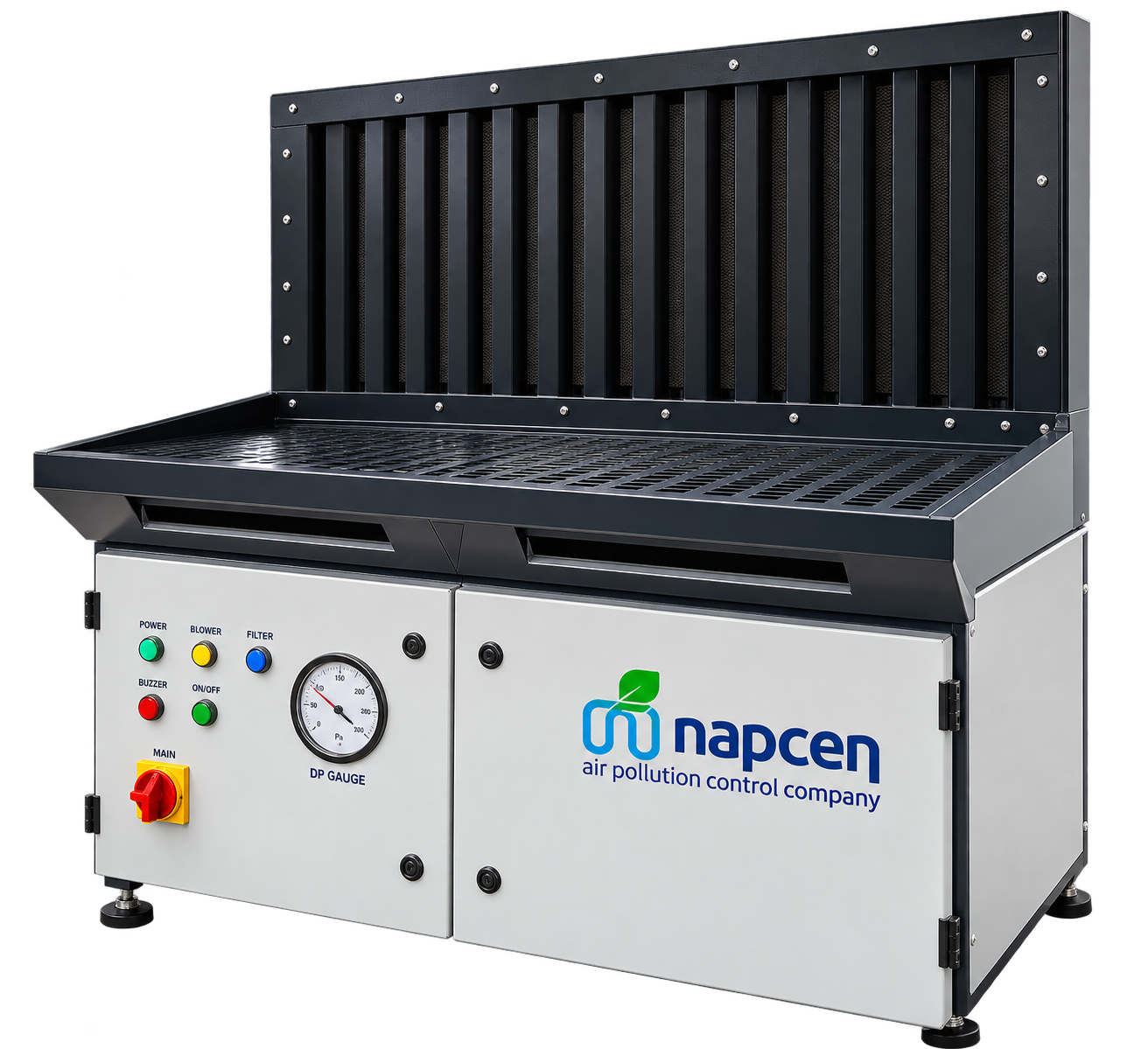
Polishing Downdraft Table
Capture airborne particles generated during buffing, polishing and surface finishing. An integrated extraction work surface draws fine metal dust and abrasive residue.
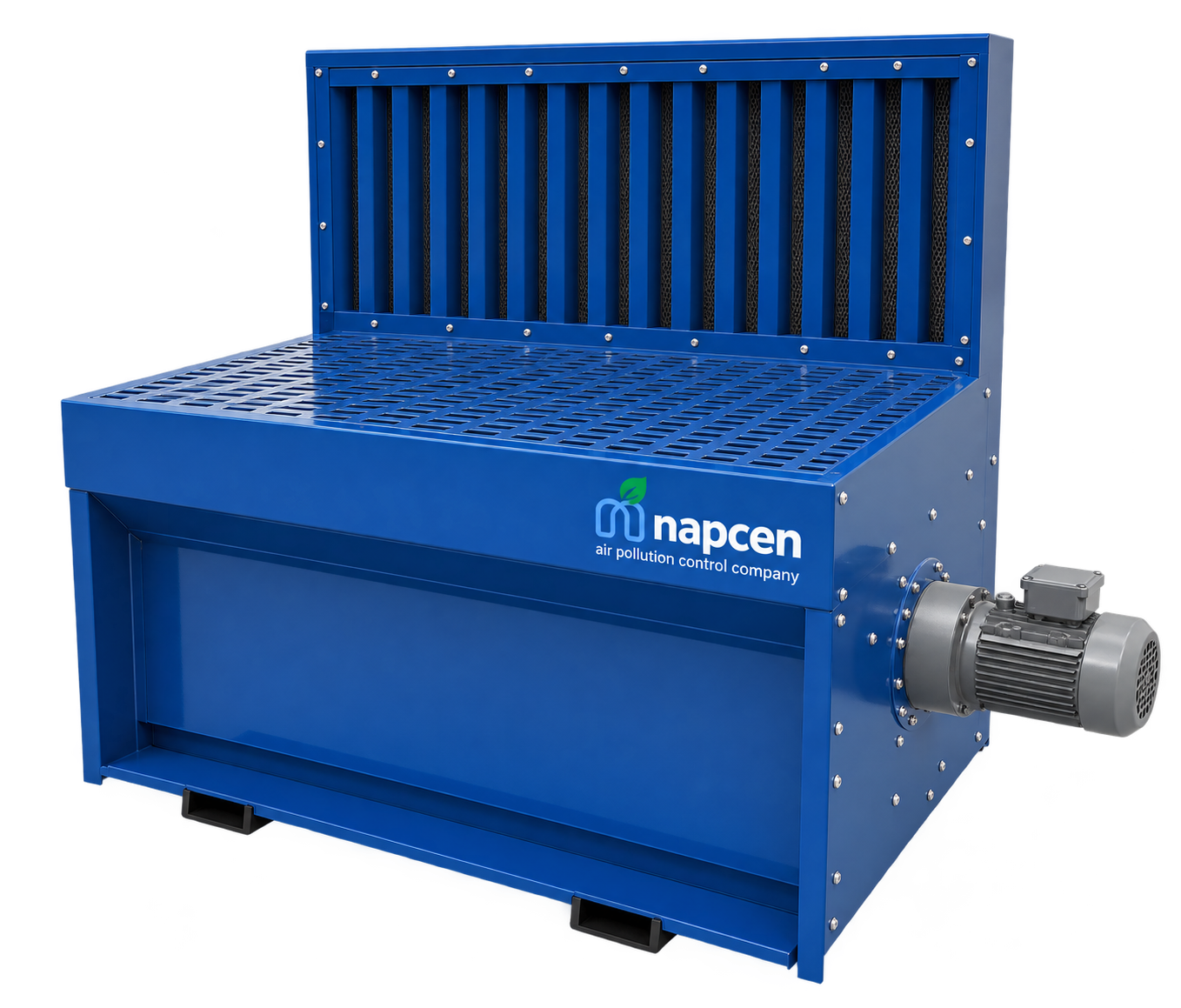
Welding Downdraft Table
Combine an industrial workbench with local extraction for welding smoke and fine particulate. Downward suction draws fumes toward the filtration system.
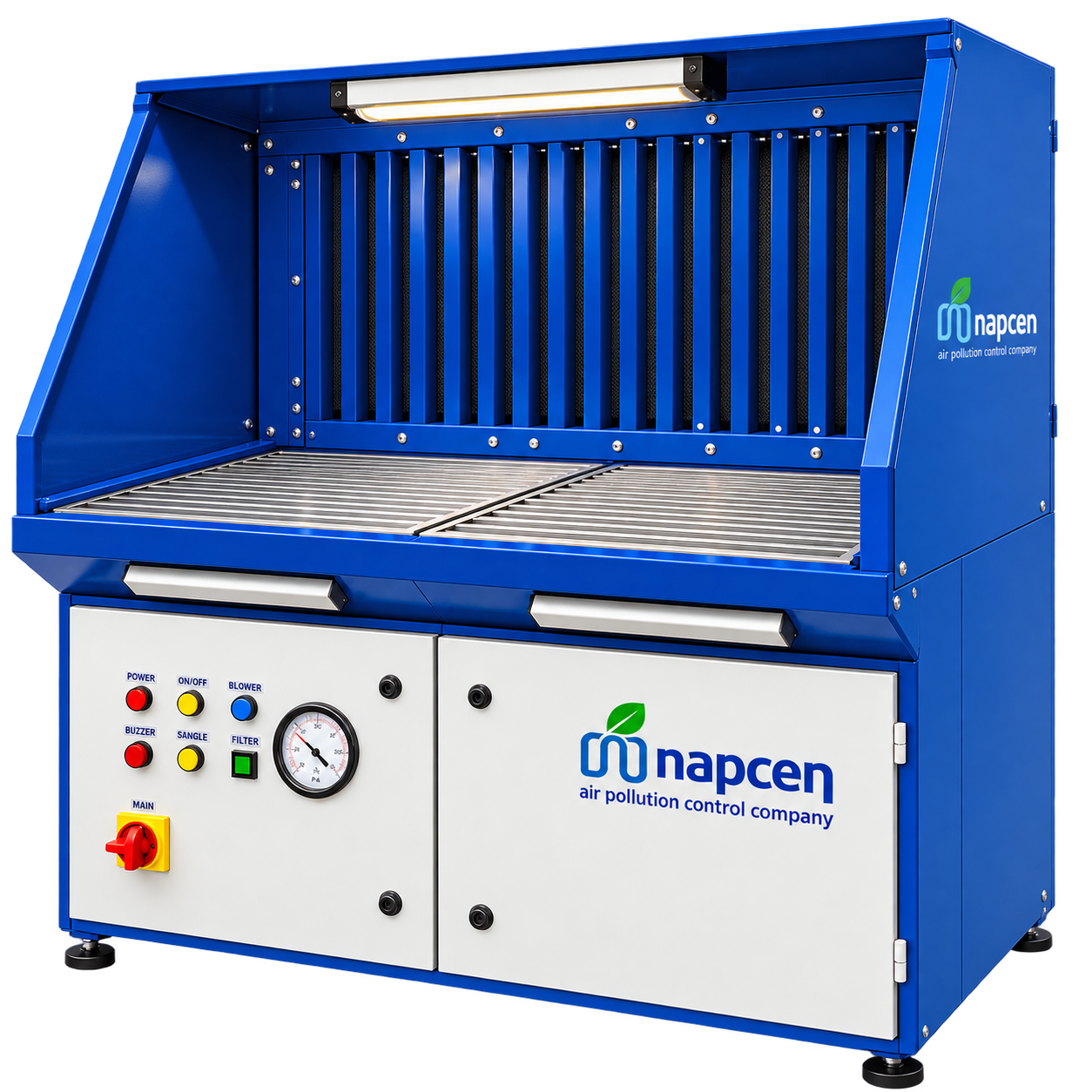
Downdraft Dust Collector Table
Integrate a working surface and particulate collection system into one industrial workstation. Air passes through the perforated tabletop carrying compatible dust.
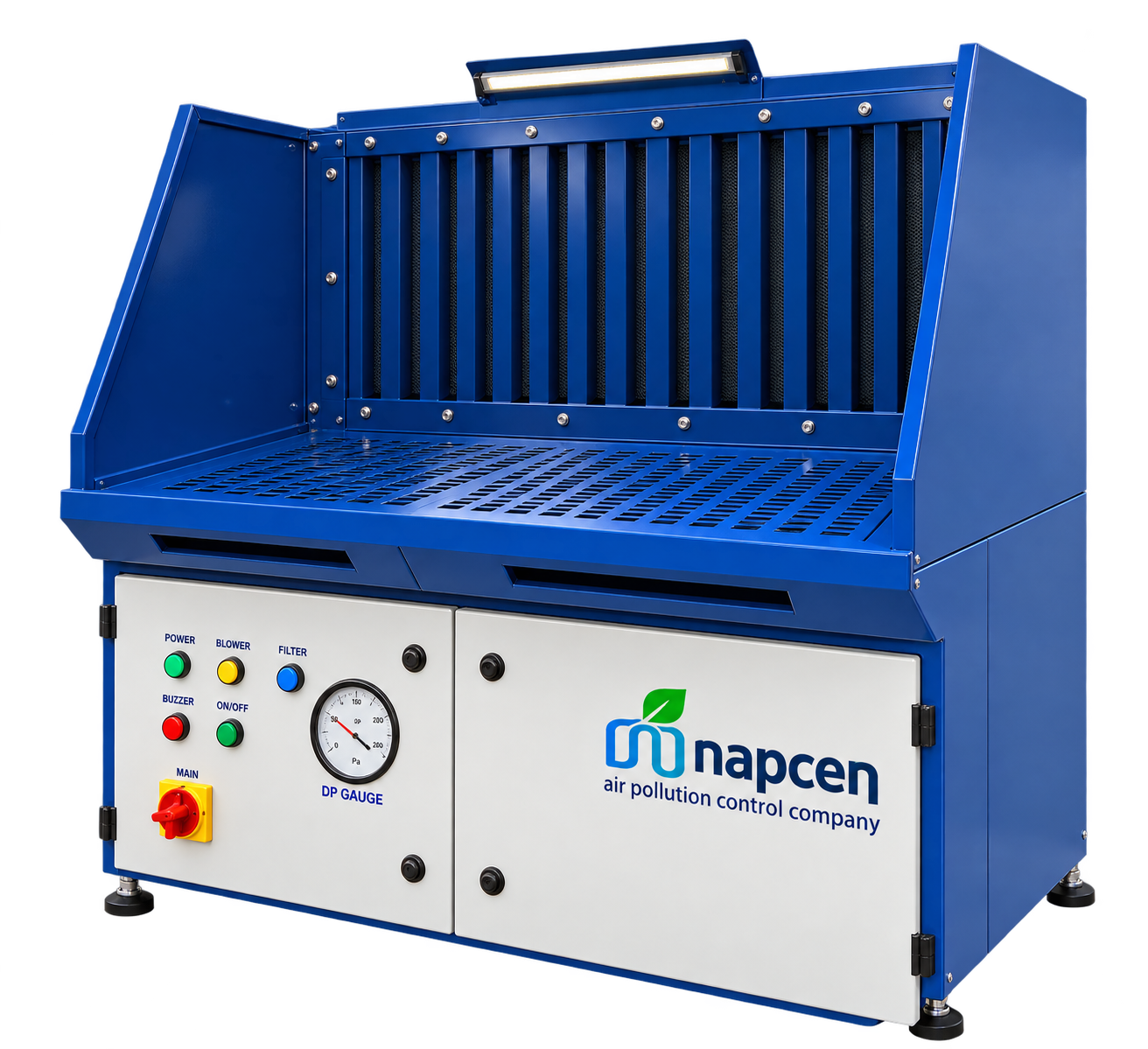
Portable Downdraft Table
Bring dust and fume extraction to workshops with changing production layouts. A compact work surface and integrated filtration system support compatible tasks.
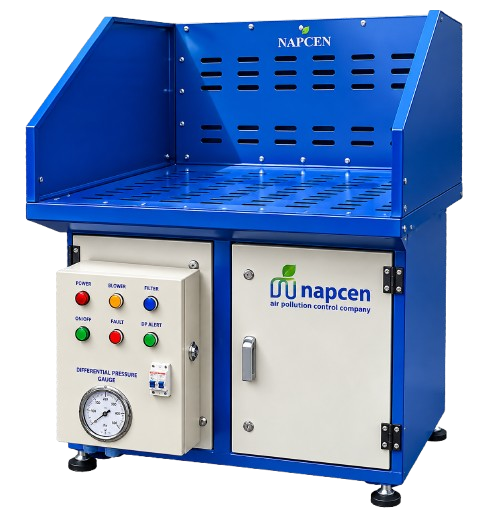
Woodworking Downdraft Table
Provide local dust extraction for manual sanding and compatible wood finishing operations. Downward airflow through the work surface draws fine wood dust.
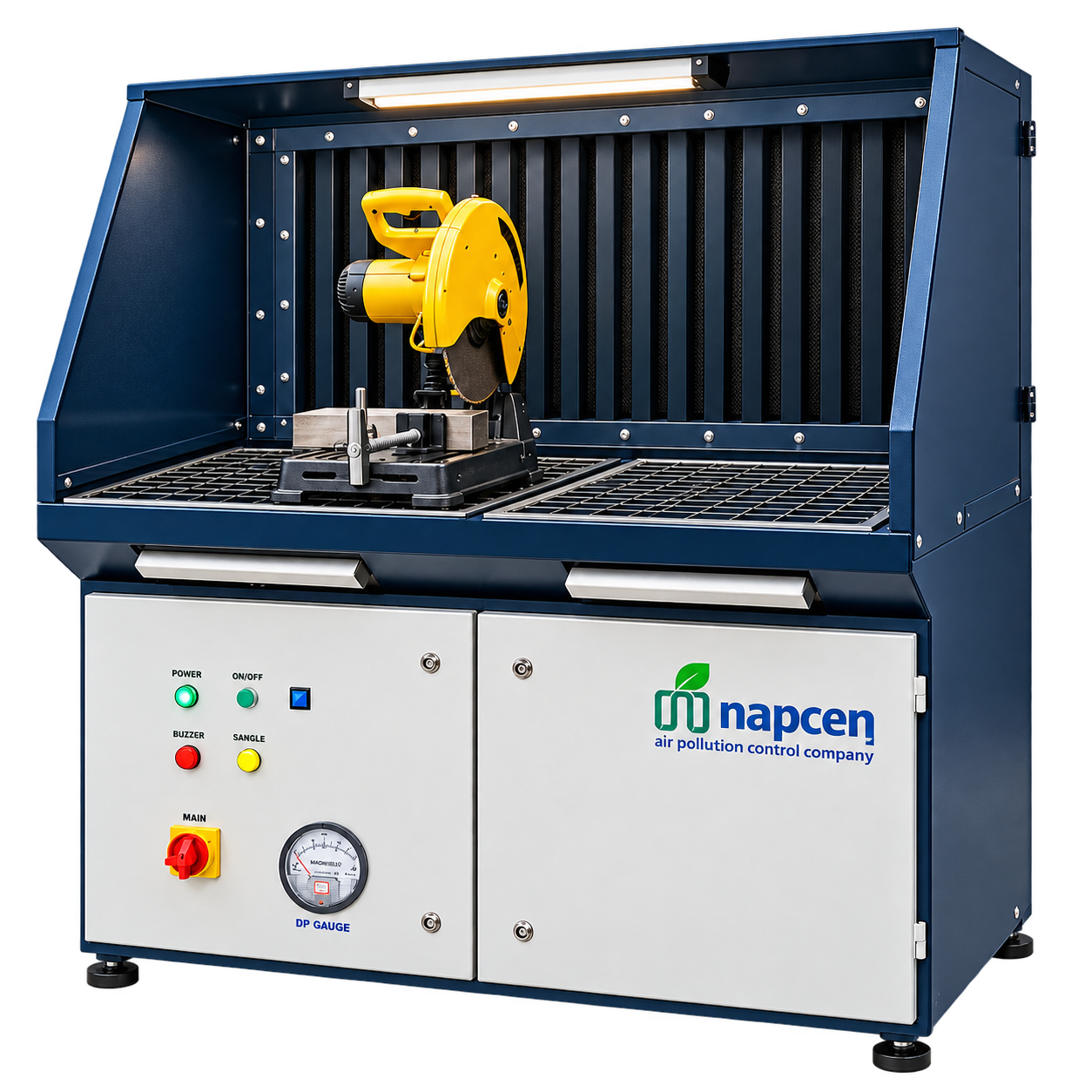
Designed around
what you make.
Explore the capture challenges behind common downdraft table applications. Select a process to see what matters before specifying a bench.
Work Environment
Dust Capture
Operations
Productivity
Need help choosing the right solution?
Contact our expertsGrinding downdraft tables
Grinding and deburring produce a mix of fine airborne dust, heavier particles and, for some materials, sparks. A suitable extraction bench combines effective capture coverage with collection technology matched to the material.
CAPTURE CHALLENGE
Particle momentum can carry dust beyond the table. Rear extraction and side panels may help contain the work zone.
SELECTION INPUTS
Base metal, abrasive, workpiece dimensions, dust loading, spark generation and daily operating hours.
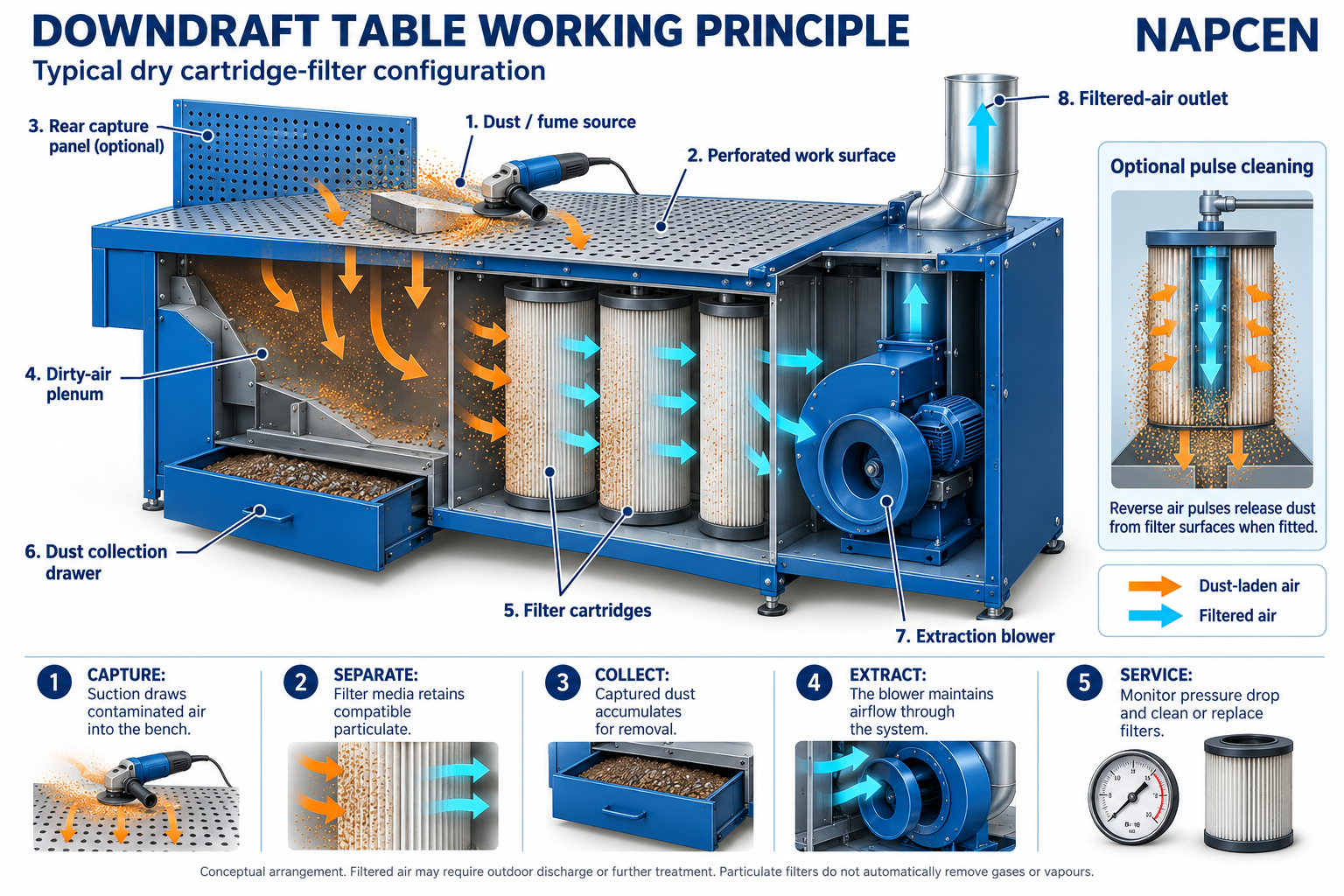
Downdraft Table Working Principle
A downdraft table works by drawing dust-laden air downward through a perforated work surface into a collection system. An extraction fan creates suction across the active working area, helping capture particles generated during grinding, sanding, deburring, polishing and suitable bench welding operations.
What Determines Downdraft Table Performance?
Effective industrial dust extraction depends on airflow distribution, workpiece position, filter condition and containment around the operation. Selecting a NAPCEN downdraft table starts with the material, production task and component dimensions so the extraction arrangement suits the actual working conditions.
Dust and Fume Capture
The workpiece sits above the extraction surface, placing collection close to the emission source. Downward airflow carries airborne particles into the bench. Depending on the configuration, rear and side extraction panels can extend capture around the working zone.
Airflow Through the Collection Chamber
Contaminated air enters an internal chamber beneath the tabletop. The chamber directs airflow toward the filtration or separation system. Workpiece size, blocked openings and workshop cross-drafts affect how effectively the downdraft extraction table captures emissions.
Particle Separation
In a dry downdraft table, cartridge or bag filters retain compatible dust and fine particulate while air passes through the filter media. A wet downdraft table uses water contact to separate suitable particles. The collection method must match the material and process.
Dust Collection and Filter Cleaning
Captured material accumulates in a collection drawer, hopper or wet-system sludge compartment. Dry systems equipped with pulse cleaning use compressed-air bursts to release dust from filter surfaces. Routine removal of collected material and filter servicing help maintain extraction performance.
Filtered-Air Discharge
The fan maintains airflow through the bench and directs treated air toward the specified outlet. Indoor return or outdoor discharge depends on the contaminants, filtration arrangement and site requirements. Particulate filters do not automatically remove gases or vapours.
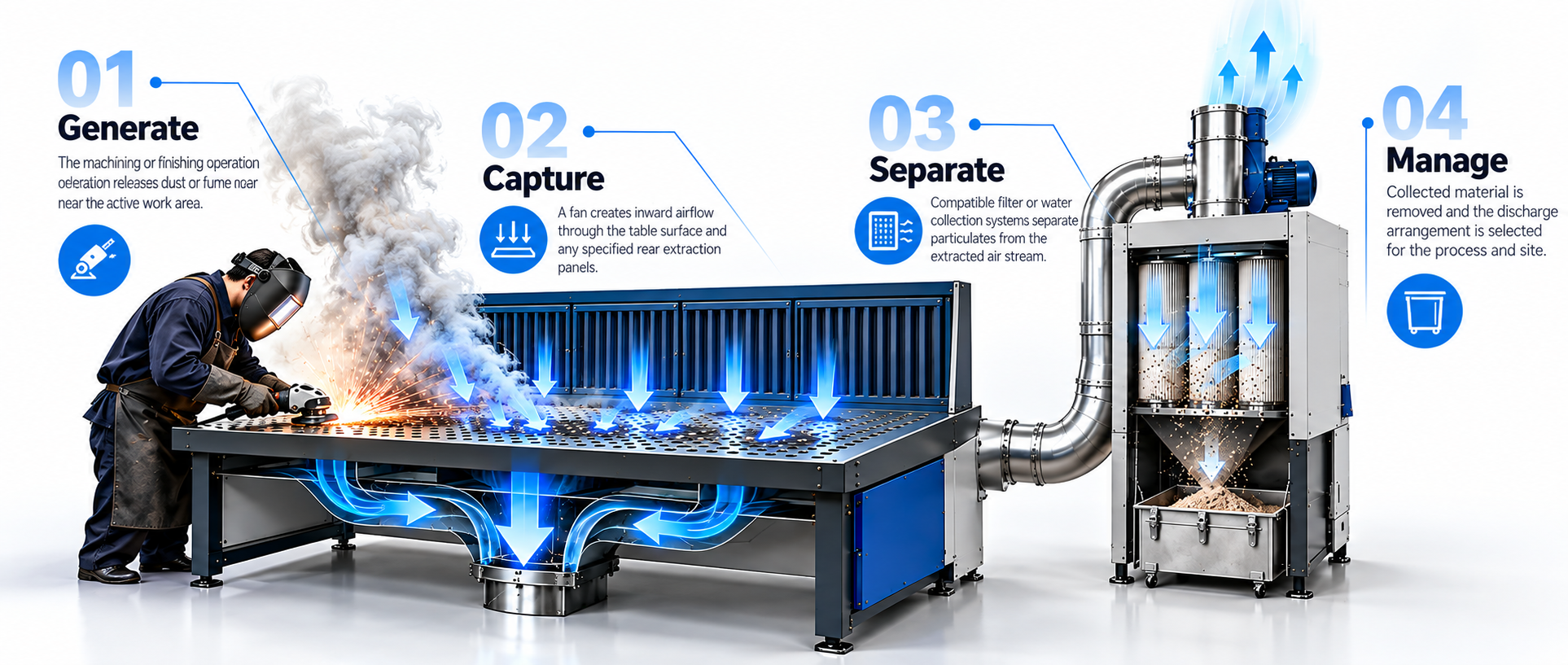
DOWNDRAFT TABLE WORKING PRINCIPLE
From the work surface to the collection system.
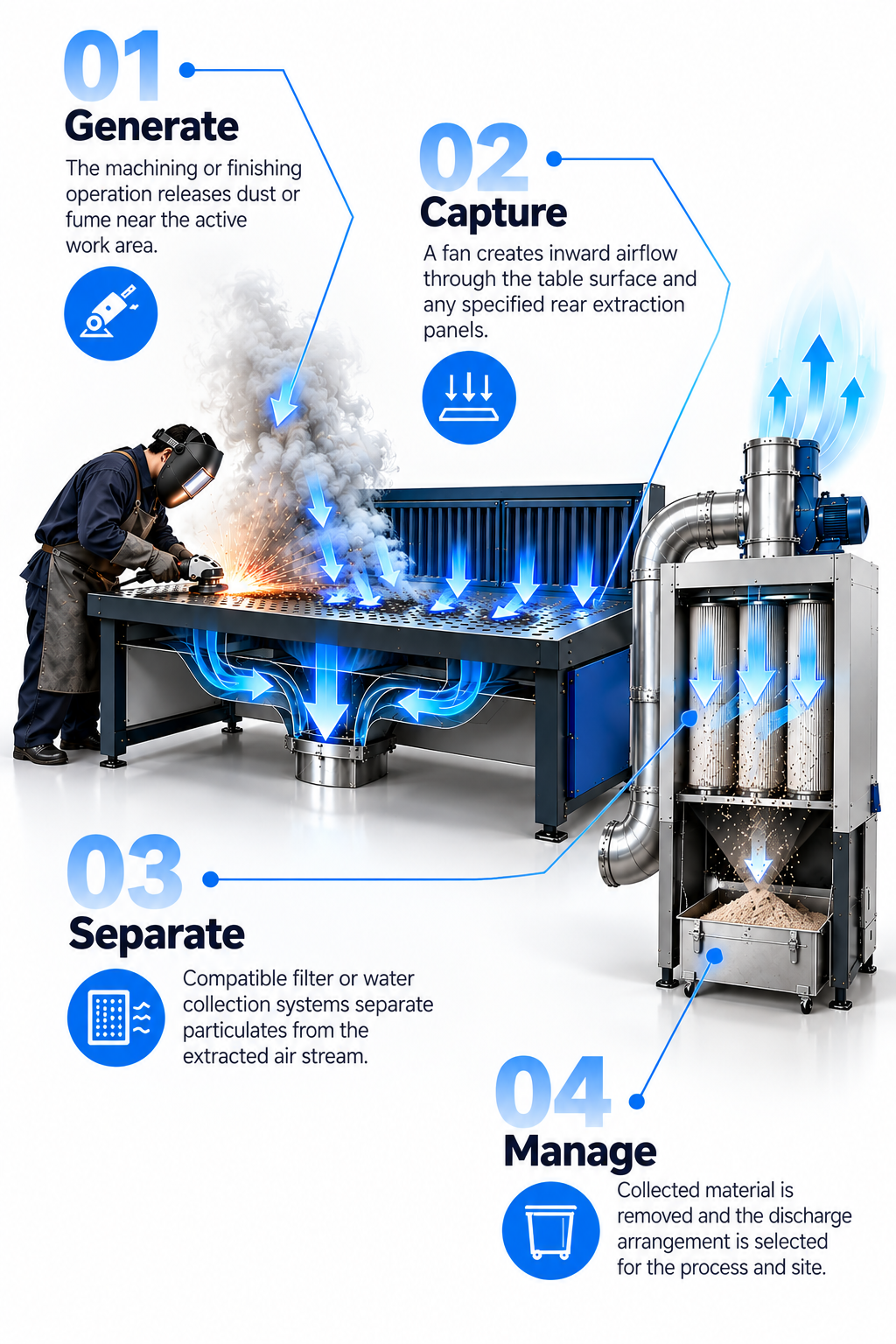
- 01 Generate: The machining or finishing operation releases dust or fume near the active work area.
- 02 Capture: A fan creates inward airflow through the table surface and any specified rear extraction panels.
- 03 Separate: Compatible filter or water collection systems separate particulates from the extracted air stream.
- 04 Manage: Collected material is removed and the discharge arrangement is selected for the process and site.
Capture performance depends on airflow distribution, workspace obstruction, cross-drafts and how the operator uses the bench. Filtration efficiency alone does not describe total exposure control.
From the work surface
to the collection system.
Capture performance depends on airflow distribution, workspace obstruction, cross-drafts and how the operator uses the bench.
Filtration efficiency alone does not describe total exposure control.
Choose by material.
Then refine the configuration.
There is no universal table for every dust. Use this comparison as a starting point for an engineering conversation.
Dry and wet downdraft collection: selection considerations
| Decision factor | Dry collection bench | Wet collection bench |
|---|---|---|
| Collection mechanism | Dust retained on suitable filter media | Compatible particles collected through water contact |
| Material suitability | Review combustible dust, temperature and filter compatibility | Review water reactivity, gas generation and mixed-metal hazards |
| Routine maintenance | Filter cleaning, replacement and dust removal | Water-level checks, sludge removal and internal cleaning |
| Utilities and waste | Electrical supply; compressed air if the cleaning system needs it | Electrical supply, make-up water and a defined sludge route |
| Hot-work duty | Evaluate sparks and ignition controls as part of the design | Do not assume water collection makes every hot-work process suitable |
| Final selection | Confirm the material, process risks and discharge requirements before choosing equipment. | |
A bench that fits the job.
A specification that fits the site.
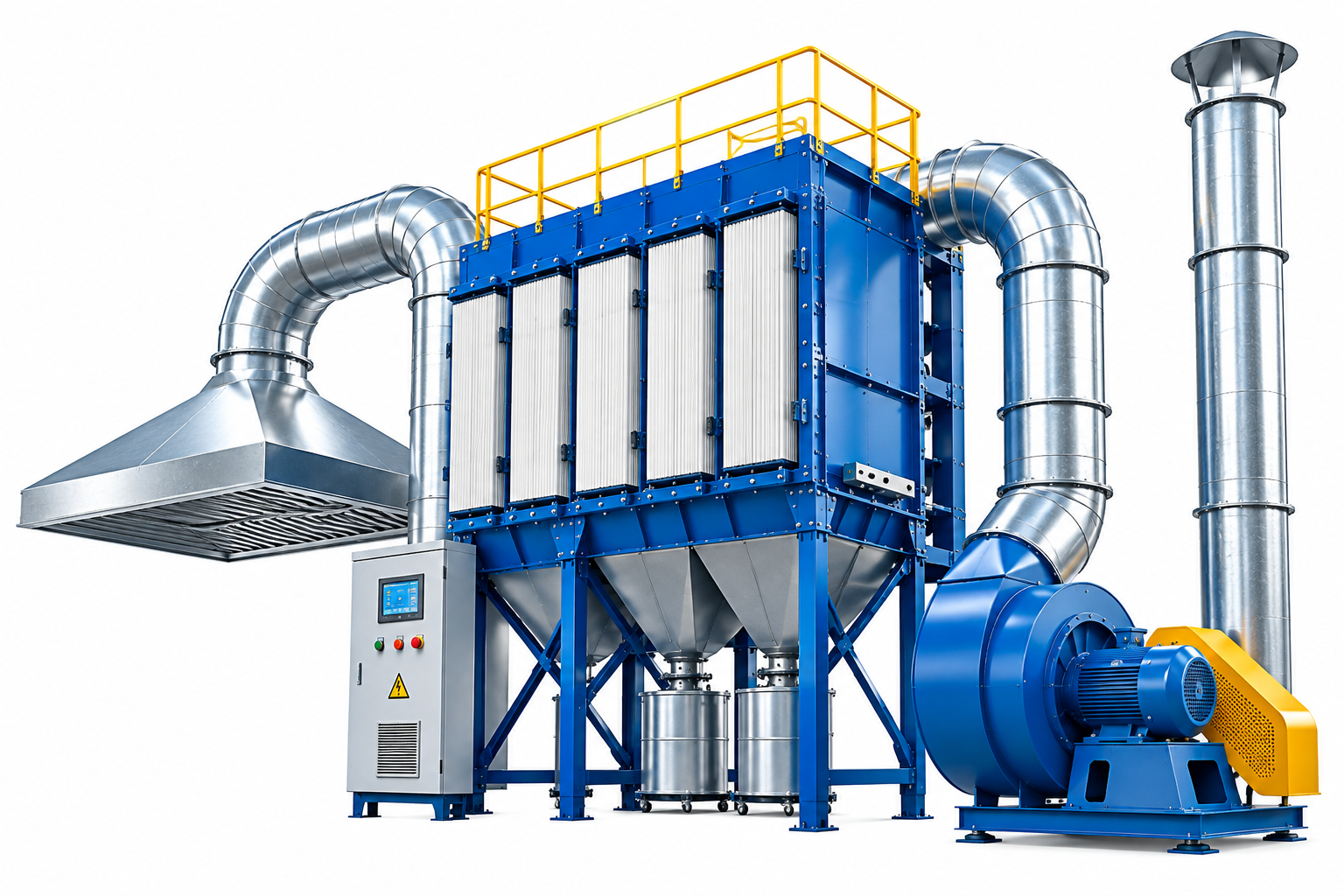
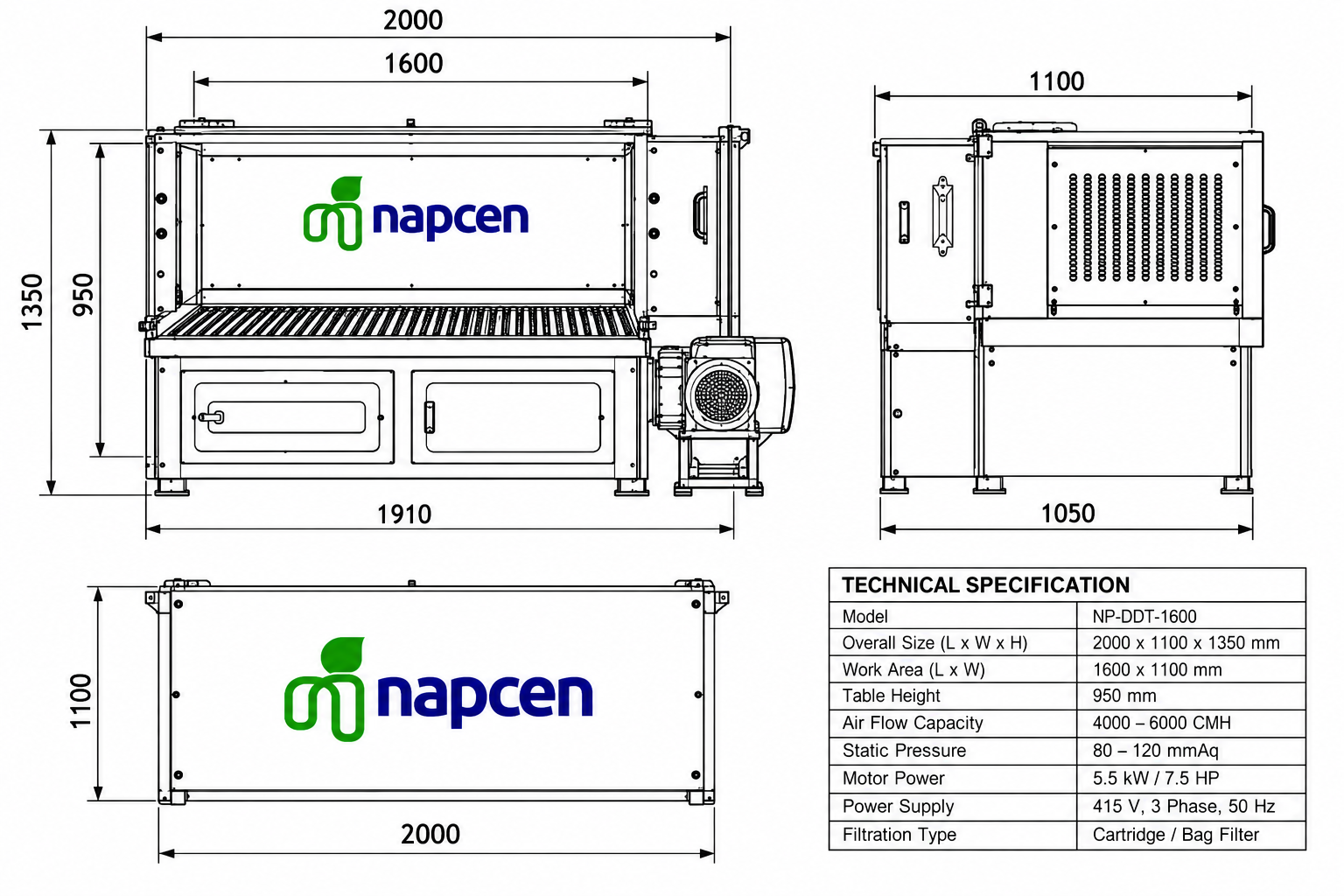
Airflow, table size and motor power should follow the application. Share the required work envelope and material details so the proposal can define the operating basis rather than rely on a generic catalogue rating.
Request a technical proposalWork surface & capacity
Part dimensions, supported load, grating or perforated top, working height and tool access
Extraction performance
Active capture area, airflow distribution, resistance, fan duty and discharge arrangement
Collection technology
Filter media or wet collection selected for the dust characteristics and process risks
Electrical & utilities
Local voltage, frequency, controls, compressed-air needs and water requirements as applicable
Serviceability
Access clearance, collection removal, filter or water servicing and monitoring provisions
Project documentation
Agree drawings, design inputs, inspection scope and operating instructions in the quotation
Compare complete solutions.
Understand the installed cost.
A downdraft table quotation should make the scope clear. Two benches with similar dimensions can differ significantly in capture arrangement, filtration, controls and site requirements.
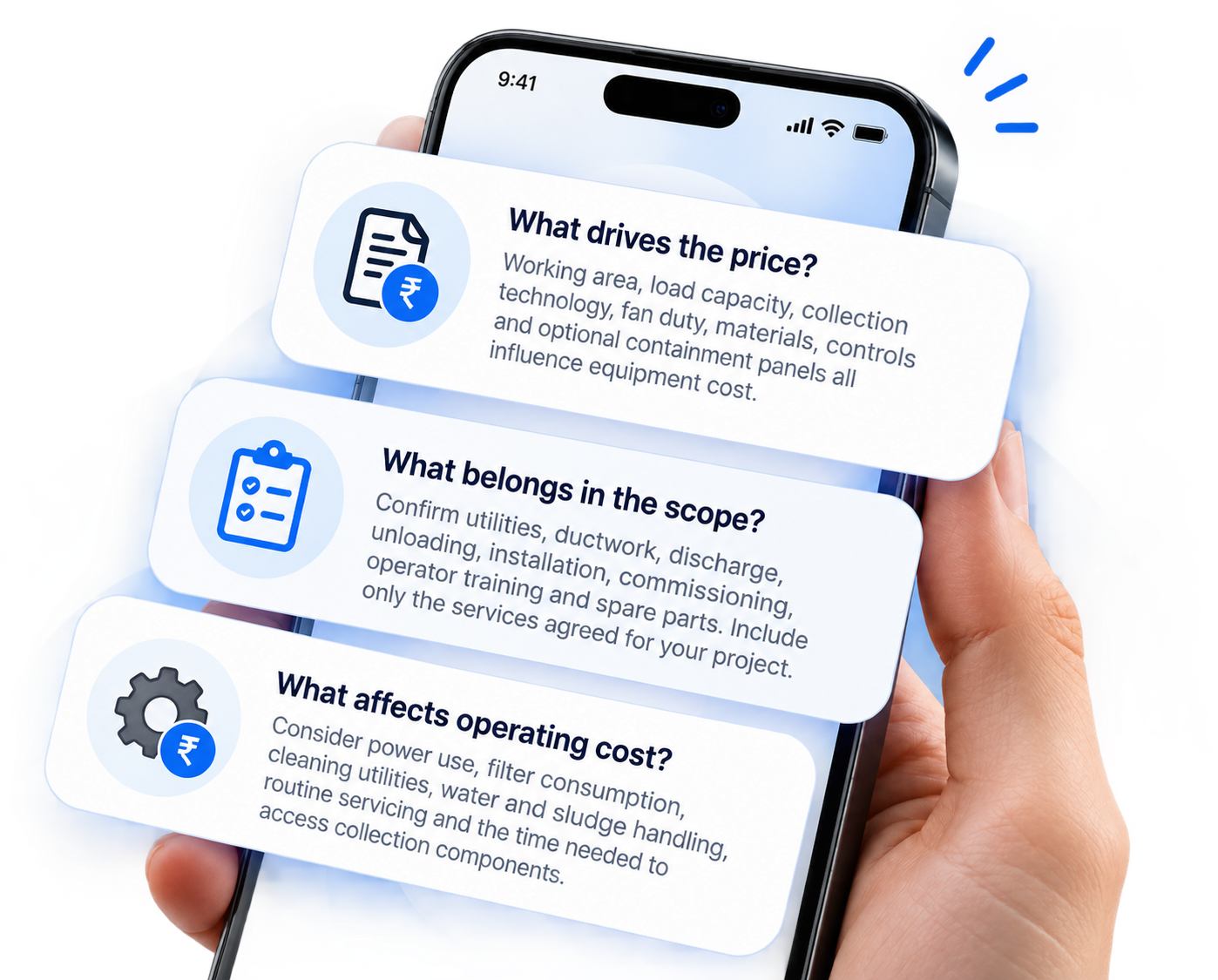
What drives the price?
Working area, load capacity, collection technology, fan duty, materials, controls and optional containment panels all influence equipment cost.
What belongs in the scope?
Confirm utilities, ductwork, discharge, unloading, installation, commissioning, operator training and spare parts. Include only the services agreed for your project.
What affects operating cost?
Consider power use, filter consumption, cleaning utilities, water and sludge handling, routine servicing and the time needed to access collection components.
Compare complete solutions.
Understand the installed cost.
A downdraft table quotation should make the scope clear. Two benches with similar dimensions can differ significantly in capture arrangement, filtration, controls and site requirements.

Industrial downdraft table
manufacturer in India.
Built around your
destination.
PROJECT SUPPORT
ENQUIRIES WELCOME
ENGINEERING SOLUTIONS
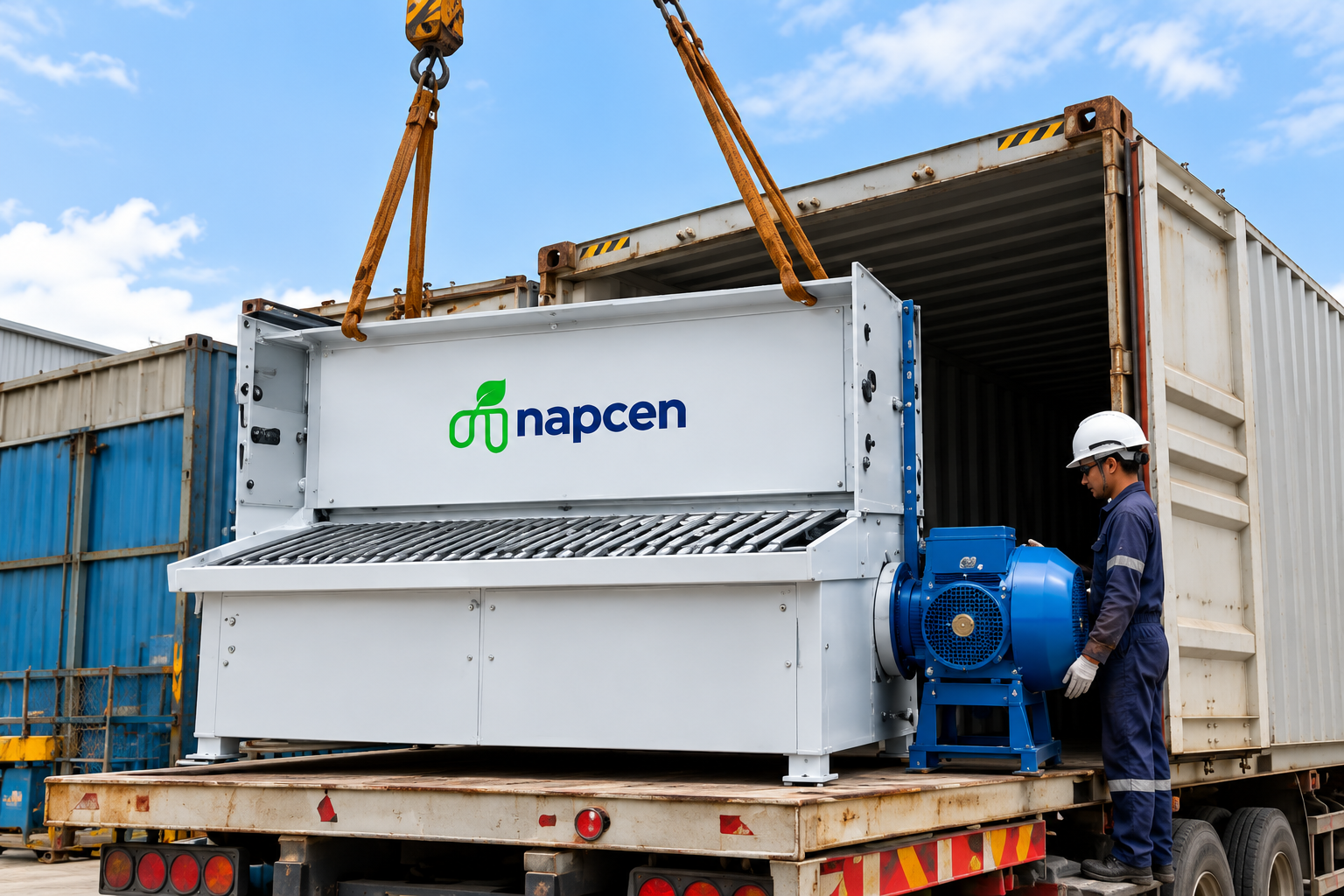
Discuss NAPCEN extraction benches for manufacturing facilities in India and international project locations. For overseas enquiries, include destination, electrical standards, required documentation and preferred delivery terms.
Indian project enquiries: Chennai, Bengaluru, Pune, Mumbai, Coimbatore, Hosur, Ahmedabad and Puducherry. International enquiries are welcome from the Middle East, Southeast Asia and other manufacturing regions; availability and delivery scope are confirmed per project.
Discuss an export enquiryProject workflow
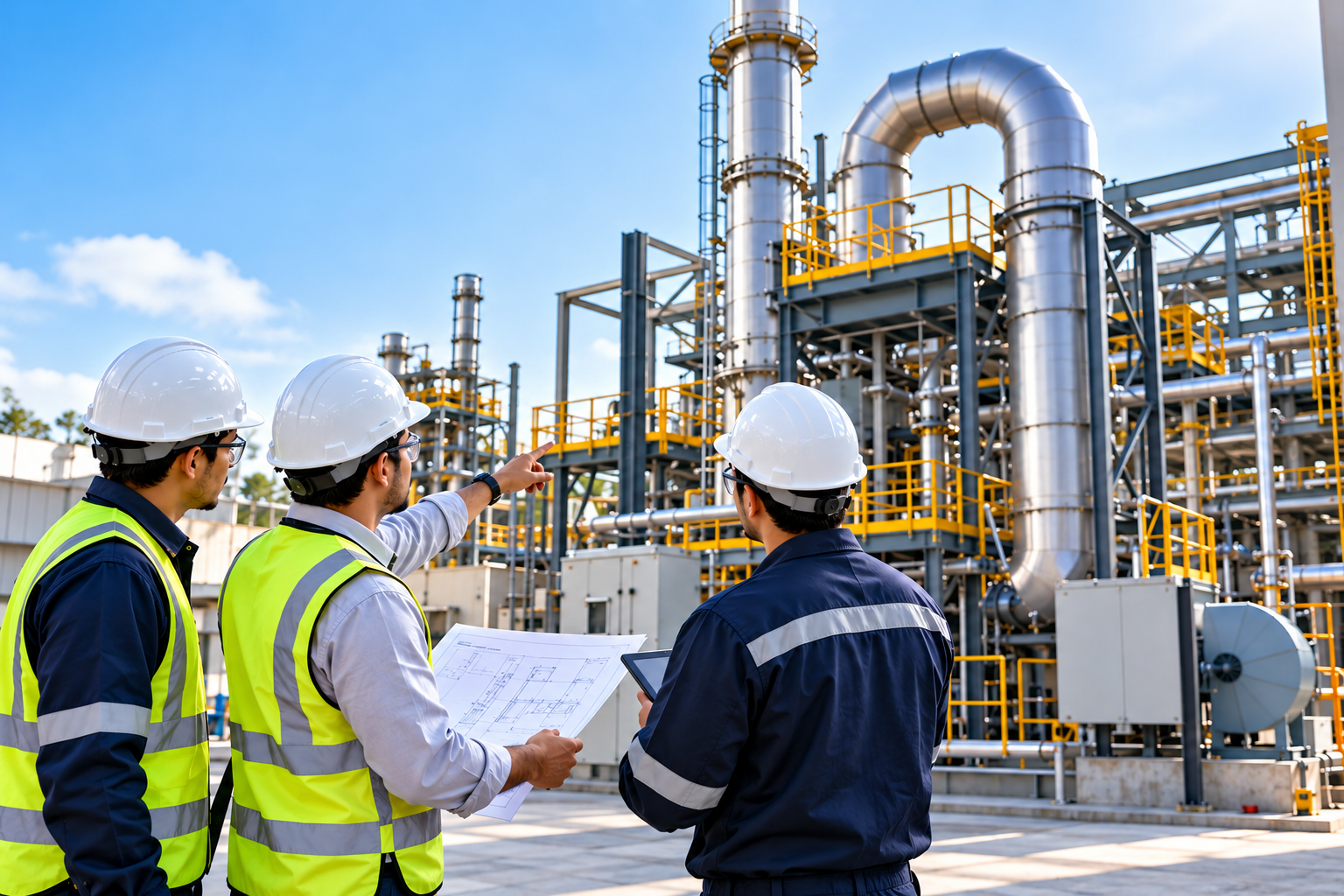
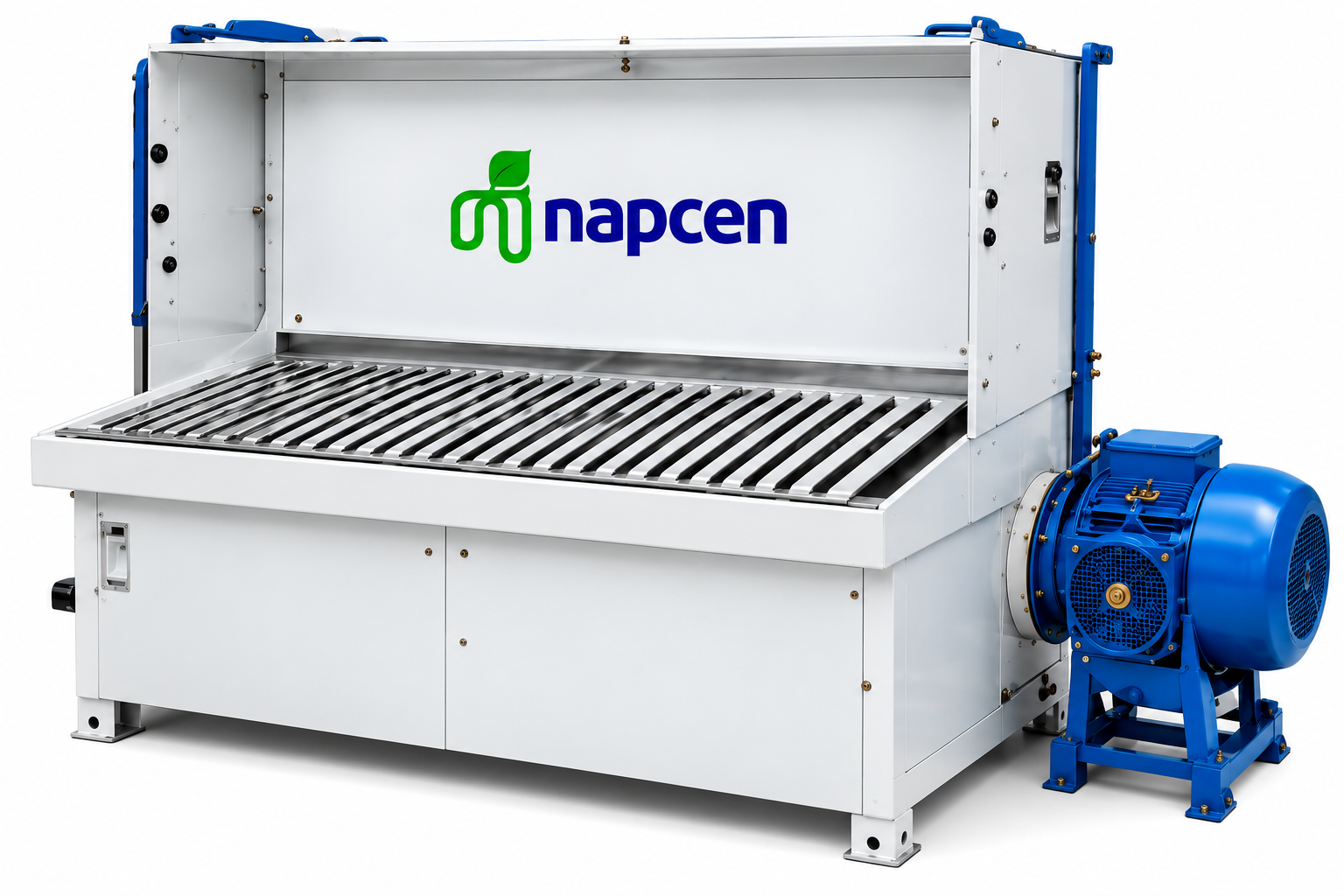
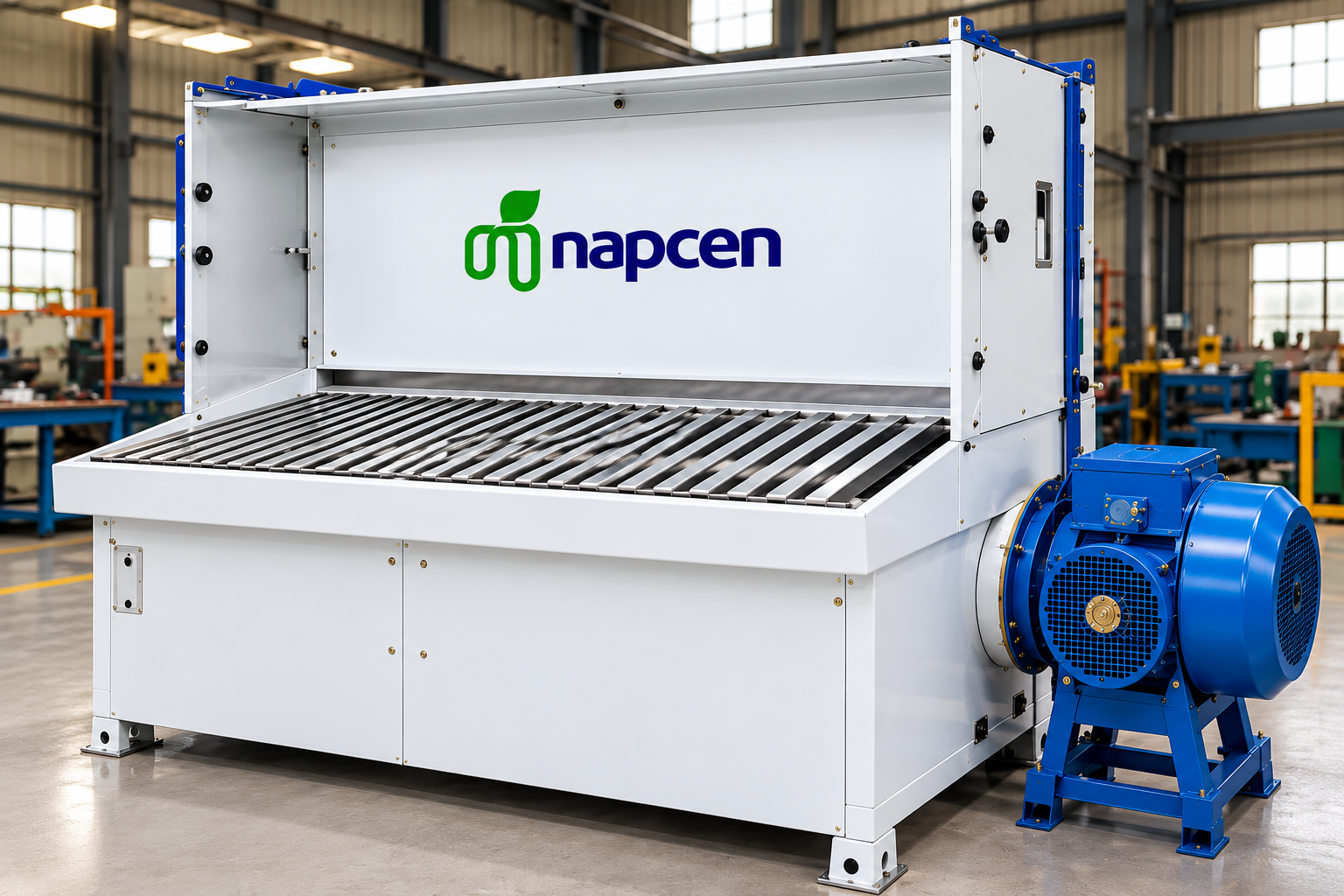
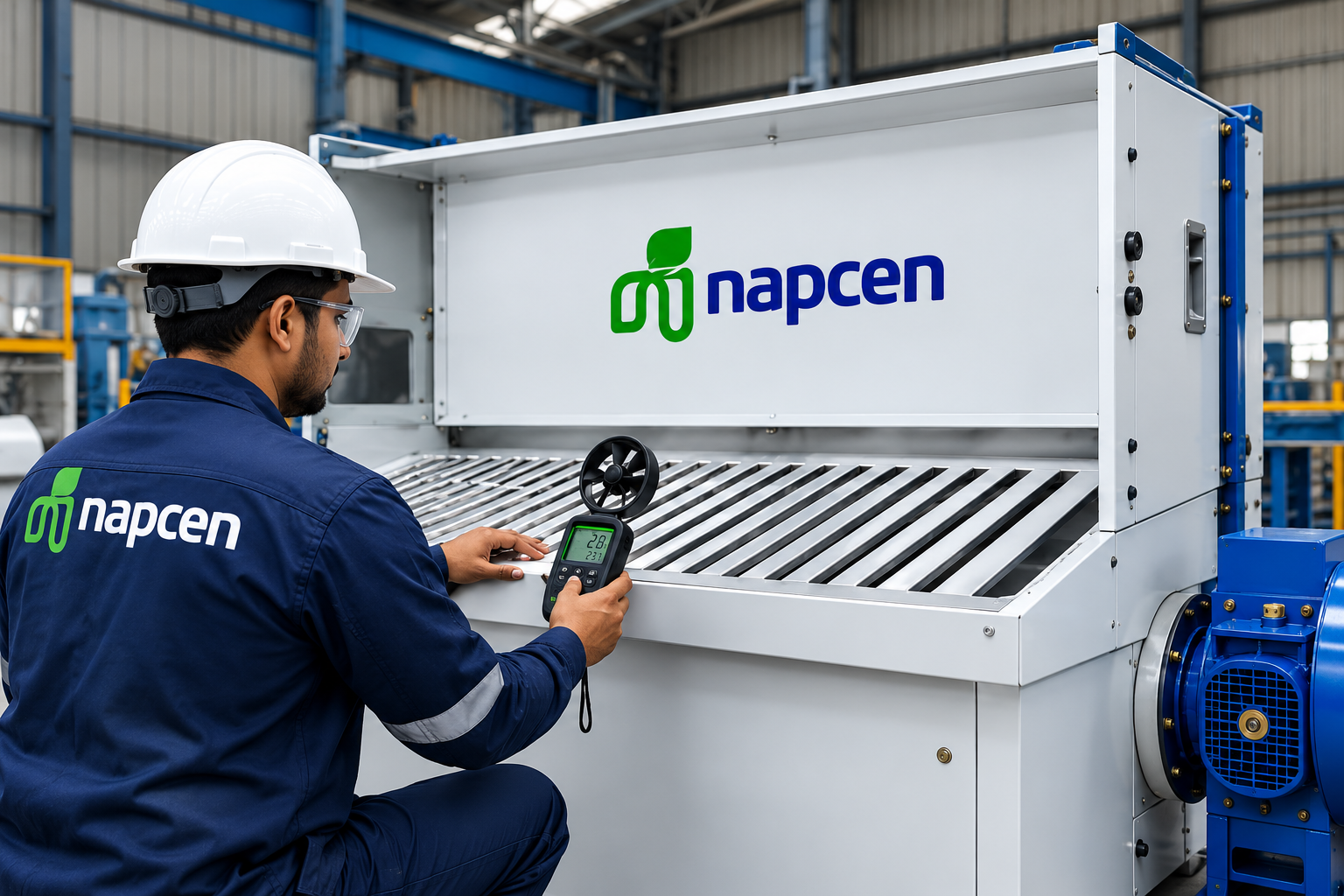
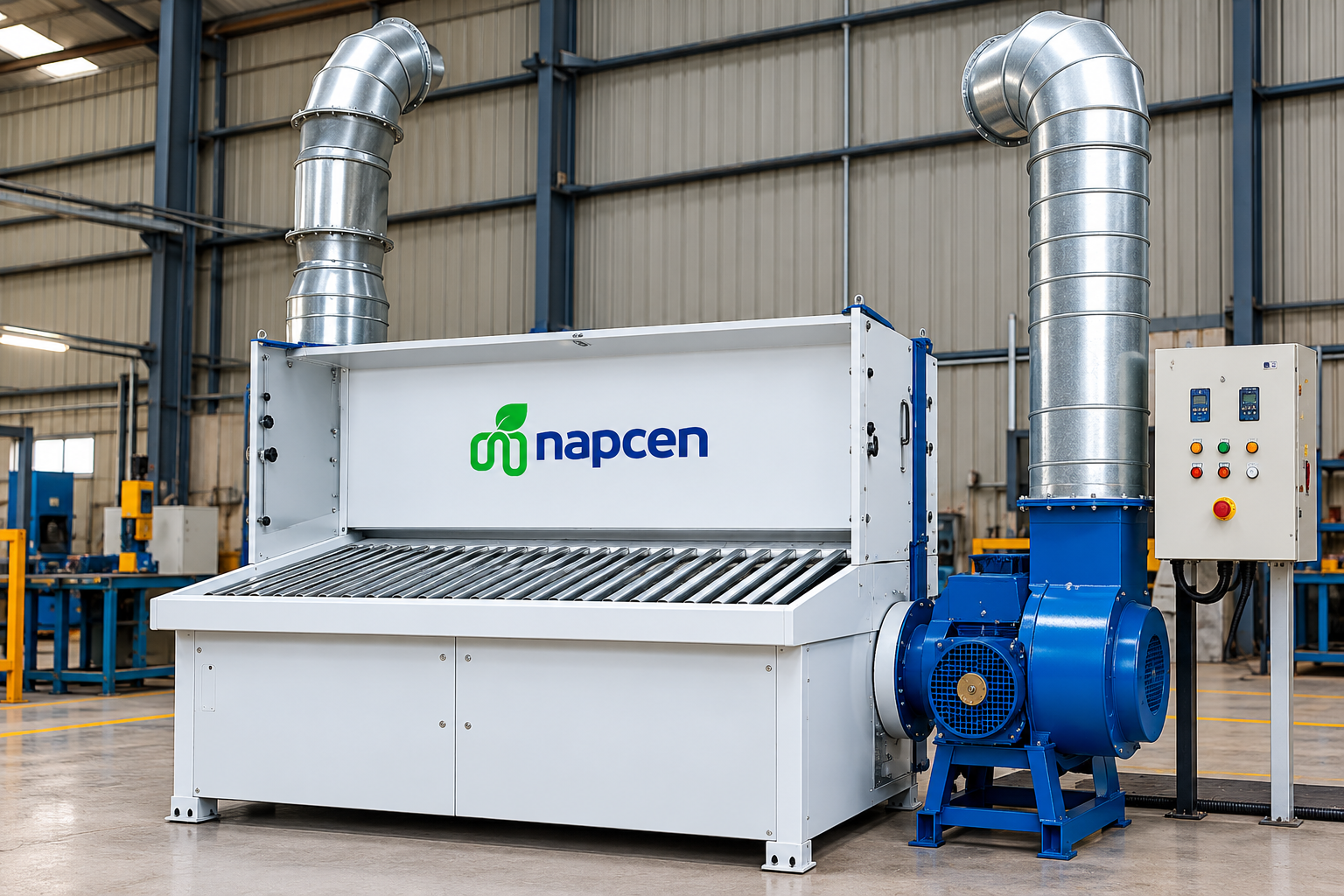
From process data to commissioning and after-sales support
Your downdraft table
questions, answered.
Practical answers for maintenance teams, production engineers and industrial equipment buyers.
Need industrial air
pollution control equipment?
Start a technical discussion with NAPCEN engineers. We analyze your process to provide the most effective pollution control solution.
Puducherry, India - 605110
Request a quotation
Provide your process specifications, and our engineers will evaluate the requirements for a customized solution.
Get my quotationEnquiry data & privacy
This preview processes form values in your browser to prepare a message. It does not upload or store your form entries on this website. If you choose WhatsApp or email, the information you review is passed to that service when you open it and sent to NAPCEN only when you confirm Send. Contact info@napcen.com about handling of enquiries. No advertising conversion tag is installed in this preview.